Pages

Tampilkan postingan dengan label tips. Tampilkan semua postingan

Sabtu, 07 Mei 2016

Five Great Tips for Writing to the Editor About a Dog Bite Story

By Teresa Lewin

One of the first tips I give dog bite victims is to stay clear of reader’s comments should their story be shared with the media. It can be upsetting as most times the comments stray off topic, blame is cast, and emotions are running high for the victim, owners of the dog and the dog’s fate is before the courts. Sadly no one wins in this type of trauma. The comments can turn into heated debates very quickly.

I dont know what happened to spawn this little article of mine. I dont know what motivated me for the first time to respond to the reader’s comments. It may have been on the heels of a recent visit I made to a family who is overcome with grief and fear after their young son had had a bad experience with dogs that were running at large. They are trying to make new goals in their life, but the look of despair was obvious in their eyes. It could have been the recent conversations I had had with a group of dog bite victims, who were filled with fear, anguish, and sadness, but also the will to overcome, and enjoy dogs again in their lives. It could have been the gentle look my dog cast upon me, whilst he lay his head upon my lap. Somehow I found the courage to write a short letter in response to a horrific attack upon a child that resulted in the childs death. Ah, geez I just had to pick the hardest topic in the world to make sense of and there just isn’t enough hair dye in the world to justify just how stressful that can be. Blinders on, I continue forward despite all the red flags, because Im a dog bite prevention educator, so I must, Must, MUST send my response to educate (at this point interject a mental photo of a Jack Russell Terrier that spots a ball that it must have despite the fact that it can’t reach it…). Thats what I do and that’s the reason I plugged on, writing, in hopes of sharing something that would resonate with all who chose to read the reader comments. Below is a copy of my letter.

Teresas Letter to the Editor
No matter what the breed of dog you choose to share space with, it’s best if parents do some research and prepare for the life changes, involving babies, children and dogs. Almost all dog bites can be prevented through education. Education is not about blaming any one person or animal, it is all about learning to prevent tragedy from occurring. Fire prevention is an example of what education can do. Almost everyone knows what to do ¡f you should catch on fire: Stop drop and roll. Families should be just as familiar with what to do to prevent dog a bite: Be a Tree. Doggone Safe’s mandate is all about Prevention as its primary objective and we are proud to be the first non-profit in history to have accomplish this through education and victim support.
Having said this, Doggone Safe is hosting a huge challenge this year in May for dog bite prevention week. For the whole month of May, we are going to try to reach as many children as we can, using the Be a Tree teacher kits to educate about dog bite prevention.

This is how we can all do something completely proactive. Did you know that by the time a child reaches the age of 12, more than half have been bitten by a dog? Did you also know that of those children bitten that the dog was known to them? We live in a society where we have chosen to share space with a whole other species, like the dog. It’s best to learn all we can about dog behaviour, how to communicate with them, how to condition them to live in our home with our children and society in general. Dogs are everywhere, even people and families who do not share space with a dog in their home, will meet one in the street, in a friend, family or neighbours home. The more you know about how a dog communicates the safer you will be.

Please all, visit www.doggonesafe.com for more information as to how to be safe around dogs and prevent dog bites. We love dogs, we love children. Let’s all do our part to help prevent terrible events like the one posted here in the news.
Five Tips to Responding to the Editor  

Many articles and letters to the editor have been written with sharing success using 5 simple steps which I have listed below. If need be, re-read my letter above and see where these tips have been used.

  1. Do not cast blame-it won’t fix the problem. Not now, not ever. There is no future there…instead write about how to avoid another attack in the future.
  2. Share the burden- The burden of society is also a point worth making such as fundraising to promote dog bite prevention in shelters, schools, community centers, to involve the whole community to address dog bite prevention.
  3. Refer to breed of dog in your response as: “the Dog”-this will help keep the reader on track with the message you are making, as well as, help set you up for success so that your message will remain intact and not be subject to debate, out of context responses, and/or political issues.
  4. Remain neutral and objective by staying on topic- if you discuss one point of view, you will have to discuss all points of view, from the victim, from the owner of dog, from the dog’s (inferred) point of view. It’s best to stick to the educational content and tips to keep everyone safe including the dog!
  5. Finally, send your comment or message to the editor of the paper and not the reader comments! You increase your chances of your comment being shared with a bigger audience. 

Advice for Dog Bite Victims

It’s also important to note that dog bite victims need to be validated. Having said that, if you know a dog bite victim that is trying to become a survivor, the best advice you can give them is:
  • Don’t read the ‘readers comments’ of your story should it make the local press
  • Seek therapy ASAP
  • Visit Doggone Safe for more tips for Dog bite victims 

If you like the letter above, please feel free to copy the letter (just give me credit for writing it on your behalf) and send it off to your local newspaper. There are many articles we have posted for your use on www.doggonesafe.com to copy and send to your local media.

Why don’t we set a personal challenge and send a letter a week right up and through Dog Bite Prevention Month of May! Send a copy of the letter I wrote above, or use another sample from our web site. Write your own letter to the media! I’m going to do the same.

Thats a proactive thing to do.

I’m looking forward to May! Cheers all,

Teresa

Teresa Lewin
Co-founder Doggone Safe Inc.

Please send your questions, comments to: safek9milton@live.ca 
Read More..

Jumat, 06 Mei 2016

Halloween Safety Tips for Kids and Dogs


Halloween is lots of fun for kids, but many dogs will be confused or upset by kids in strange costumes and by lots of people coming to the door, but never being invited in. Doggone Safe offers the following tips for dog owners, kids and parents:

Dog owners:


  1. Secure your dog behind a closed door or in a crate in a room away from the front door or the party if children are meeting at your house.
  2. Give him a Kong stuffed with hotdog, Rollover or other soft dog treats, Greenies or other long lasting chew. Ask your vet if you need advice on safe and nutritious chews for your dog.
  3. Play music or leave a TV or radio playing in the dog’s room to help mask the sounds of the activity at the front door.
  4. Close drapes so that the dog does not see people coming and going through the window.
  5. If you have a dog that barks at the sound of the doorbell, disconnect it or watch for trick-or-treaters so that they do not have to ring or knock.
  6. Puppies and dogs that like to chase can get overly excited by costumes with dangly bits or streaming material. Supervise very carefully if you have a dog that may try to play with your children’s costumes while they are wearing them. Teach kids to Be a Tree and stand still if the dog does start nipping at their costume since the more they move, the more exited the dog will get.
  7. Keep your dogs (and cats) indoors around Halloween time. Pets have been stolen, injured or poisoned as part of Halloween pranks or other rituals.

 Kids and Parents:

  1. Avoid houses if you can hear a dog barking behind the door, you can see a dog behind a screen door or you see a dog tied up in the yard or barking behind a fence.
  2. Never approach any dog, even if you know him. He may not recognize you in your costume.
  3. If an owner opens the door and there is a dog there, just stay still and wait for the dog owner to put the dog away. You can tell them you do not want to come near the dog. Do not move toward the person and dog. Wait for them to come to you to give you your candy. Wait for them to close the door before you turn and leave.
  4. If a dog escapes just stand still and Be a Tree (hands folded in front, watching your feet). He will just sniff you and then move on. Wait for the owner to come and get the dog before you turn away.
  5. If you meet a loose dog, Be a Tree and wait until it goes away.
  6. It is best to ignore other people’s dogs on Halloween if you meet them out walking. The dog may be worried about all the strange creatures that are out and about. Even if you know the dog, he may not recognize you in your costume.
Doggone Safe wishes everyone a safe and happy Halloween!
Click Here to download our tips as a handout


Read More..

Kamis, 05 Mei 2016

Sun Safety Tips for Dogs

By Suzanne Alicie

The heat of summer is upon us! My doggie, Bear, may be getting old but she still loves to romp in the back yard or simply lie under a tree and nap. Fresh air is good for dogs, and you may think that heat is better for your dog than cold but there are several ways in which both heat and sun can harm your dog.

Rule number one is to always make sure your dog has plenty of fresh, cool water and a shady or covered area to lie down and relax. We’ve discussed other summer safety tips for dogs here on the Responsible Pet Ownership blog, but let’s focus this time on sun safety.

You might assume that because your dog is covered in fur he’s unlikely to suffer any problems from the sun, but let me surprise you! There’s more to me than a sappy doggie mommy who has been trained to dole out the CANIDAE TidNips. I know some stuff!

Use Sunscreen

Sunscreen can help prevent your dog’s nose and ears from getting sunburn. These are sensitive areas and are exposed even if there is hair on the dog’s ears. Keep in mind that light colored dogs are similar to folks with very fair skin — they will burn faster than dark dogs. Some dogs have thick coats while others have thinner coats. Poodles that have been freshly groomed have quite a bit of exposed skin for sunburn, so it is important to keep a close eye on them when they are playing in the sun.

Sun and Pavement are a Bad Combination

Heat and sun can make the asphalt and concrete of roads and sidewalks burning hot. No matter how tough your dog’s feet may seem, hot pavement can burn their pads causing terrible sores and pain. Keep in mind that if you wouldn’t want to walk on it barefoot, you shouldn’t expect your dog to either. Also, your dog perspires through his foot pads so the more heat that’s underneath his feet, the less able he is to cool himself down. The same goes for hot sand at the beach. If it makes you hop and reach for your flip flops, then don’t make your dog walk on it.

Wait 30 Minutes 

Just like that old rule for kids about swimming, you should wait 30 minutes after your dog eats before you encourage him to run and play in hot sunshine (or swim for that matter). This will prevent vomiting and upset stomach from romping on a full stomach in high heat.

Sunshine Leads to Overheating

While sun and outdoor time is good for your dog overall, it’s important to be aware that direct sunlight takes its toll on your dog and can lead to heat stroke and other problems. Older dogs and those who are overweight or who have any sort of heart or lung condition should be kept out of the sun as much as possible. Early morning or late evening walks are best for dogs that are at risk.

I could go on about the dangers of high temperatures for dogs, but one thing sticks in my mind, and that is the danger of leaving a dog in a parked car. Even if it’s a fairly temperate day, a closed car can turn into an oven in minutes. Never leave your dog in a parked car in the summer for any amount of time, no matter how short. That doesn’t mean you should deprive them of a beloved car ride – just don’t park and leave them sitting.

Top photo by Dan Harrelson
Bottom photo by Don DeBold

Read more articles by Suzanne Alicie
Read More..

Rabu, 04 Mei 2016

Dog Training Tips

by: Andrei Smith

One of the reasons for doing an obedience dog training is to establish a foundation between you and your dog. Many dog owners believe that dog training is only for those who wish to compete in obedience trials, but they are wrong.

Dog training requires only a simple persistence to be successful and can be useful to help fulfill some of your dogs basic and social interaction needs. Here are some dog training tips to guide you along the way.

1. Firm and Friendly
When you give commands such as come, you want to use a happy and friendly voice. While on the other hand, youll want a lower firmer voice for sit, down, and stay commands.

2. Praise & Reward
Always praise your dog or offer him when he learned new commands.

3. Be Patient
Patience is the key when you are training your dog. Focus on a single command a session and end it on a positive note. Dogs are incredibly smart and will pick up all your commands. After each session, spend some time playing. He will associate the time with you as positive and anticipate his training again.

4. Use the correct dog training equipments
If you have a well-behaved dog, a lead and a buckle will do on your obedience training. However, if your dog is uncontrollable with undesirable and distracting behaviors, you should use a training collar. You dont have to worry about the size as most electronic training collar now clearly indicate what size of dog the training collar is intended for.

5. No Distractions
Try to pick a quiet area when training your dog to do tricks or commands. A secluded back yard works best if you want to train your dog for basic obedience commands only.

6. Reprimand
Do not hit your dog! Any time your dog has undesirable behavior, be firm and friendly. Remember, dogs are mans best friend.

7. Be Positive
It is necessary to use positive reinforcement when training your dog by offering some dog treats and a lot of praise if he performs correctly and learn new commands.

8. Play with your dog
Dogs which are trained are a pleasure to take for a walk and a pleasure to own.

Dog Training Resources

Kingdom Of Pets
Dog obedience training by sitstayfetch. Learn how to obedience train your dog effectively to stop your dogs behavior problems.

Dog Food Secrets
Increase the lifespan of your dog by up to 134%.

Dove Cresswells Puppy and Dog Training Online
Dog Training Online offers dog training, puppy training, dog obedience training, puppy house training and dog house training, puppy potty training, crate training, dog potty training, crate training a puppy.


About The Author:
Andrei Smith is a pet lover and web copywriter connected to http://www.dogtrainingcollar-4less.com/, a company that specializes in dog training collar at a low cost. Visit http://www.dogtrainingcollar-4less.com/ for more dog training collar tips and other popular dog training collar products.

Read More..

Selasa, 19 April 2016

Dog Training Tips On How To Train A Dog

Dogs Training

  • Many people start their dog on the path to dog training success by enrolling them in a basic obedience class. This is a great idea because you will learn how to teach your dog to do basic commands such as “sit”, “stay”, and “heel”. You can use these dog training commands by using verbal commands and physical actions. For example, right after you say the word “sit” you gently push your dog’s bottom down onto the ground and put them in the sit position. Immediately say “good” and smile. Give them a tasty treat as well. Basically, you want to do as much as you can to reinforce the action of sitting when you say “sit”.

  • Dogs act like absorbent sponges when it comes to learning proper behavior and tricks. If you do your job properly then dog training should be a hit. Your dog is ready and eager to learn proper behavior. They want to please you. Therefore, if they aren’t following your instruction it might not be their fault. You might be giving confusing dog training instructions.

  • Dogs thrive on positive reinforcement and encouragement. Positive reinforcement such as acting excited and petting your dog when they do the right behavior help with your dog training efforts. It is a dogs nature to want to be close to you and make you happy. Showing encouragement and praise will help your dog much farther, much faster in their dog training. Make sure to encourage a dog through each dog training accomplishment, no matter how big or small.

  • Food is a powerful motivator when it comes to dog training. You will be hard pressed to find a dog that passes up food or a tasty treat. Dogs are always hungry and welcome any situation where food is involved.

  • Dog training should be a gradual process with regards to skill level and learning more complex commands. Give your dog time to understand new commands. They most likely won’t learn it the first day you teach them. You will have to review the commands and proper behaviors often.

  • Have dog training sessions at various times throughout the day. Your dog needs periodic training to reinforce the proper behaviors. You dog’s attention span can wane, so make sure to keep the training sessions to five to ten minutes long.

  • When you first start dog training work in environment that is free from distractions so your dog can focus on their behavior. Once your dog understands the basic commands you can try to use the commands in a busier environment. One thing you may find is that your dog is distracted and seems to have forgotten the commands. Don’t fret. This can happen because dogs tend to be situational learners and your dog just needs to work on the commands in the busier environment
    .
  • Too many treats equals an overweight dog. Dog training is a process that involves tasty treats, but too many of these treats can be a bad idea for your dog’s waistline. Use small treats and wean your dog off treats as they understand the different commands. They will then rely on your praise as the positive reinforcement for each behavior. These eight dog training tips will set you on the road to happy, healthy, obedient pooch

2006 (c) mdarma.com - All Rights Reserved Worldwide Dogs

Read More..

Sabtu, 16 April 2016

Tips for Living with a Dog that Misses Someone


By Eliza Wynn

Have you ever wondered whether your dog misses someone who used to be a big part of his day-to-day life? Humans arent the only species with the ability to bond – or to miss those with whom theyve bonded. Pets have feelings, and they definitely miss beloved pack members when theyre apart. The good news is that there are ways you can help ease the loneliness and stress your dog feels when a loved one isnt around.

Spending time with your dog is always important, but its even more so when he misses someone. In addition to simply keeping him company while you go about your day, be sure to set aside some special time for your canine friend. Hell appreciate playtime, walks, training games and just hanging out together. Make sure he has a job to do, and dont forget to talk to him. Even if youre convinced he doesnt understand a word you say, the positive attention and the sound of your voice will be more than welcome.

Nowadays, many people travel frequently for both business and pleasure. Others move out, sometimes temporarily while attending college, but often permanently. Pets that have bonded closely with them can get lonely, anxious or even depressed. Fortunately, being apart doesnt always have to mean complete separation; technology provides several options to bridge the gap. For example, webcams and smartphones enable users to see each other even when theyre miles apart. If your dog misses someone whos away, try setting up a video chat. If thats not possible, even a simple phone call in which he can hear his friends voice will reassure him.

Sadly, some separations are permanent. If your dog misses someone who has passed away, he will mourn the loss. Try offering an item of clothing with his loved ones scent. Sleeping with this item should provide comfort while your dog adjusts to life without his friend. Some dogs find themselves in a new home due to the death of their owner. When this occurs, its a very confusing and sad time for the dog. In addition to grieving, he has to adjust to a new environment, schedule and rules. To help with this adjustment, try to maintain his original meal and walk schedule at first if you know it; you can gradually make any major changes necessary.

If your dog misses another pet that passed away, he may find himself adjusting to a new position in the pack. Although it might change his status yet again, finding a new companion for your dog can help, but only under the right circumstances. Responsible pet owners never adopt a pet if theyre not ready, willing and able to provide a safe, loving home.

If you find that you are in a position to adopt, however, a new friend could help your dogs blues. Before making that commitment, arrange a meeting to be sure they get along well, and as always, make sure youre adopting for the right reason. If you decide to go through with the adoption, dont forget to buy your new dog or cat his own supplies, including some premium quality CANIDAE or FELIDAE food.

Whether the separation is temporary or permanent, you can make the situation easier for your dog. He wont forget about the loved one he misses, and hell still have plenty of kisses left for his pack member if theyre ever together again.

Photo by Gene Chan

Read more articles by Eliza Wynn
Read More..

Jumat, 15 April 2016

Tips for Finding a Dog Rescue Group

By Suzanne Alicie

Although I’m not in the market for a new dog at the moment, when the time comes I will get a rescue dog. There are plenty of great dogs in need of a forever home out there. But what if you’re looking for a rescue dog to adopt, yet still want to get a purebred or a specific breed? That’s when you need to know how to find a rescue program for the type of dog you’re looking for.

Check with Breeders

Many dog breeders are approached when a dog needs a home, but they can’t take in all the dogs of a breed so they need to be able to tell people who to get in touch with for a rescue. Because breeders specialize in a specific breed, they often know a lot of people who deal with the same kind of dogs. When a person cares deeply about a breed and wants to be helpful, they will know of a reputable rescue where you can find the dog you’re looking for.

Look Online

Simply use your search engine to find rescue groups and then narrow down the search with the breed you are looking for. BUT keep in mind that not all rescues are the same. Do a little research, check out their website, and try to locate people who have worked with the rescue to make sure it is a reputable program.  Facebook is a great way to find out what people think of an organization and what their experiences have been.

Call Your Vet

Veterinarians are often involved with specific rescue programs. Many donate their services to reputable rescues and would be happy to refer you to the right program to find your new dog.

Rescues handle dogs of all ages and in all conditions. The health evaluation and behavioral screening is an important factor in making rescue dogs available to families. If you visit a rescue and they can’t provide you with this important information, then you should find another program.

CANIDAE has donated their premium quality pet food to many rescue groups over the years, helping to provide countless dogs and cats with the proper nutrition and care they need. Feel free to utilize this page on the CANIDAE website to help you locate a great rescue.

Things to Consider

The kennels at the rescue should be clean and neat without the overpowering scent of excrement. The dogs should be bathed and healthy if they are in place for adoption.  You want to find a rescue that has taken the time to learn and work with the dogs to determine their temperament. You want a rescue that keeps the place clean so that the dogs will remain healthy. When you look at the dogs, of course you will want one that seems friendly and eager to see you. Just keep in mind that a dog in a rescue kennel may be frightened and shy, so don’t pass over the ones that hang back, because you could miss out on a real connection. Set aside plenty of time to visit and get to know the dogs; you don’t have to decide in one day.

There are fees involved in adopting rescue dogs, after all most rescues are nonprofit and it takes money to provide food, shelter and care for these dogs. Be prepared to pay a fee and fill out paperwork before you can take your dog home. Really thorough pet rescues will even do a home visit or accompany the dog to your home the first time. This is a great way for the rescue group to ensure that you are providing the dog with a wonderful and forever home. Just as you’ve checked out the rescue group, expect them to check you out as well. Be prepared to answer questions and to be observed while you are getting to know your dog.

If a rescue group just hands a dog over to you with no investigation, no questions, etc. then you’re likely dealing with a group that also hasn’t done a thorough job of vetting the dog for adoption. Check around, listen to what others have to say and do your own research on a rescue before you choose to adopt from it. The extra time and care will help make sure that you, as a responsible pet owner, find the perfect dog for your family.

Top photo by Rick Wasser
Bottom photo by born1945

Read more articles by Suzanne Alicie
Read More..

Selasa, 12 April 2016

8 Positive Dog Training Tips That Work

By Linda Cole

The best teachers are those who first figure out what motivates a child, and then help them learn by communicating clearly. Training your dog is basically the same. If you know your dog and understand his point of view, its easier to teach him when you’re both on the same page. The following positive dog training tips can help you be more successful.

Positive Feedback

Reward positive behavior and ignore non-aggressive negative behavior. Dogs are quick to learn what works and what doesnt, and when it comes to getting attention, even negative feedback is acceptable, from a dogs point of view. Yelling at your barking dog might stop him for the moment, but it doesnt change his behavior. If you dont want him jumping up on you, dont reward him with attention – ignore him. Teach him whats acceptable with positive attention, and reinforce his behavior with CANIDAE TidNips™ treats and lots of praise. Dogs learn what you teach them, good and bad.

Positive Reinforcement

Remember the high school teacher who gave you positive reinforcement and helped you work through problem areas until you understood? Staying calm, patient and consistent is the respectful way to teach kids and dogs. Yelling and losing your temper isnt cool and tells your dog you need to work on leadership skills. No one, including dogs, likes to be yelled at.

Association 

You have less than 2 seconds for your dog to learn to associate an action with a behavior. When training, treat/praise your dog as soon as he completes a command so he learns to connect his action with your command. With a “sit” command, treat/praise the second his butt hits the floor. Dogs live in the now and you cant punish him for what he did hours or even minutes ago. If you catch him in the act, however, you have a chance to change his behavior with positive reinforcement.

Give a Grand Prize

When I started working with my Border Collie mix to teach her to sit, shed give me a look to see if I really meant what I said. After a few seconds, shed start to sit, hesitate for a second and then put her bottom on the floor. But if she sat immediately, I gave her lots of treats and abundant praise for a job well done. This is a good tactic to use just before you end a training session. Give your dog a command he is sure to obey right away and reward with multiple treats and praise. If your dog loves a game of catch or tug of war, this would also be a grand prize reward for him – something special to celebrate the achievement.

Redirect a Behavior

The sit command is a basic one that comes in handy in many situations. Dogs that jump up on people can be taught to redirect their behavior to a more acceptable one of sitting when they greet someone. A dog that likes to use his paw to get your attention can be taught to give a “high five” on your command instead of pawing at your leg or arm for attention. Redirect negative behavior with a desirable behavior.

Practice Success

When training, give your dog plenty of opportunities to succeed. You arent giving him a quiz to pass or fail. Dont expect him to learn how to sit and stay for 15 seconds right off the bat. You need to start off slow with shorter time periods. Begin with a few seconds and add a couple seconds at a time until he learns to wait for you to release him. Dont be afraid to go back to the beginning and start again, if necessary. Help him be successful one step at a time, and reward each success.

Use Food Rewards

Food is a good motivator that can help your pet learn a behavior, but praise is also a powerful incentive. Always give a treat while your pet is learning, along with lots of praise. Eventually, you want to eliminate treats for the most part, but dont stop completely. Every now and then, give treat rewards to let your dog know hes doing a good job. Besides, even dogs like an occasional surprise.

Keep it Short and Fun

Learning is easier when its short and fun. Sessions should be around 5 minutes, two or three times a day. Work on one behavior at a time. You dont want to confuse your pet by overloading him with multiple behaviors to learn at the same time. Once your dog learns a command or new behavior, practice it daily to reinforce it.

Top photo by Molly Hayden
Middle and bottom photos by Andrea Arden

Read more articles by Linda Cole
Read More..

Minggu, 10 April 2016

Dog Training Tips and Tricks Recall Training Your Dog

This article gives you tips, tricks and sound advice on recalling training your dog.

Do you have to keep an eagle eye on Buddy when you’re bringing in the groceries or answer a knock on your door? Is he just itching to make a mad dash for the great outdoors whenever the door is opened? If he makes his escape, does he fail to come back when called? If so, don’t despair, Buddy needs recall training.

Having a dog that comes the first time you call him is a rare thing. More often, it is the product of a grueling training schedule; repetition, rewards; repetition rewards. You probably know the scenario by now. If not, you have a lot to learn.

Before you throw your hands up in defeat and make Buddy wear his leash both indoors and out, or risk losing him to the dangers of the street, consider recall training.

Recall training has two basic concepts. The first is to treat your dog well each time he comes to you. Be it a kind word, a pat on the head, or a scratch behind the ears, Buddy will relish the affection you show him.

The second concept takes much more effort. Purchase a line that measures ten to twenty feet. Clip it onto Buddy’s collar and take him to the park or into the yard. Then, start training.

The line allows Buddy to put some distance between you. When Buddy has ventured almost to the end of his line, call him. A simple, “Buddy come,” will suffice. Be sure to have lots of treats in your pocket just in case he shocks you and comes immediately. If he does come, give him a treat. The worst scenario is that you will have to reel in the line to make him come. With this method, Buddy is responsible for his own behavior, but you still have control over the situation if he doesn’t obey.

If Buddy sits perfectly still when you give the “come” command, or watches birds and squirrels playing in a nearby tree, he hasn’t obeyed. Either reel him in, or go and get him and bring him to the spot where you gave the command. If this is the case, Buddy gets no reward, but no punishment either. Down play the incident and try again later.

The next time you try recall training, follow the same agenda. Never repeat the “come” command. Buddy should come the first time he’s called. If not, reel him in or go and get him and take him to where you gave the command. Down play the incident and try again later. Do this again and again and… well, you get the picture. Repetition is the name of the game. The process is long. It may take a week, a month, a year or more of constant recall training before Buddy gets it right and comes on your first command every time. But…diligence pays off and in time when you say, “come,” Buddy will obey.

In the meantime recall training will have its ups and downs. There will be times when Buddy will come. When this happens, give him a treat, rub his head, and scratch his ears and say, “good boy,” or some thing similar. Whatever else you do, reward his obedience immediately. He’ll soon get the message that obedience reaps rewards and affection.

Above all, never scream, yell, or hit Buddy if he doesn’t obey. If you do, it will set your training efforts back to day one. Buddy will fear you and instead of coming on command, he will put more distance between the two of you. When he doesn’t obey simply go to him, grasp his collar and gently take him to where you gave the command. This lets him know you are ready to enforce your commands and that he has no choice but to obey.

If you run into problems and Buddy just won’t obey, seek the services of a professional dog trainer. It may cost a bit, but a professional will be able to point out where you’re going wrong. It’s well worth the expense to know that Buddy will respond to your commands. This ensures that he will always be safe, so you can enjoy each others company for many years to come.
Read More..

Rabu, 06 April 2016

New Study Child Dog Bite Victims Need Ongoing Emotional Support

A recently published study provides evidence that child dog bite victims require ongoing emotional support.

Barbara W. Boat, Cinnamon A. Dixon, Erica Pearl, Lacey Thieken and Sarah E. Bucher. 2012. Pediatric Dog Bite Victims: A Need for a Continuum of Care. Clincal Pediatrics. 51: 473-477.

Abstract: The authors assessed the ongoing needs of 34 pediatric dog bite victims and their families 1 month after receiving care in a pediatric emergency department. More than 70% of the parents noted at least 1 new concerning behavior in their children, and more than 85% of the parents also endorsed concerns about their own reactions. Half of the parents believed that children, in general, might benefit from interventions to help with postbite fears and nearly three quarters felt that families would benefit from education regarding dog bite prevention. The  majority (85%) of the parents believed that additional supportive services could be offered effectively at emergency department or pediatric office/clinic visits. A template for a dog bite information card is presented.

Conclusion: In conclusion, the majority of child dog bite victims and their parents in our study experienced changes in behavior and additional stress in their lives after the incident. Furthermore, these parents expressed a need for additional supportive services and a desire for prevention education related to this topic. Thus, we advocate that child dog bite victims and their parents may benefit from a continuum of care after these injuries and that dog bite prevention education should be an integral part of any child safety discussion with families.

Read the full article
Read More..

Senin, 04 April 2016

Dog Training Tips Treating Aggressive Behavior in Dogs

Aggressive behavior is a natural tendency in dogs but must be controlled for the safety of humans and other animals.

Dogs have a natural instinct for aggressive behavior. Growling, biting, snapping, nipping and lunging are normal dog behavior, but it is not acceptable for pets who are companion animals. The safety and of humans and other pets should have first priority, and dogs who exhibit aggression should be taught to behave appropriately.

Aggression is a common problem and the first step toward solving the problem is to consult your veterinarian. Pain or other underlying physical conditions may cause a usually docile dog to snap or bite. A dog who has a sore limb due to arthritis might snarl at a child who inadvertently causes pain. Hypothyroidism, a low level of the thyroid hormone, can cause a dog to become anxious. Medical treatment may alleviate the condition and return the dog to his mellow self. If medical problems are ruled out the vet may refer you to a behaviorist who will evaluate your dogs behavior and develop a plan to moderate the behavior.

There are many reasons a dog may become aggressive. Some breeds are genetically predisposed for aggressive behavior. Early life experiences, hormonal surges, gender, physiological state, and external stimuli can all play a role in creating an aggressive personality. Unfortunately some owners actually encourage aggressive behavior in their dogs, perhaps to compensate for their own inadequacies.

The owner should keep a journal of the dogs behavior when he shows aggression. Knowing what appears to cause the behavior, how often it occurs, who the behavior is directed toward and the specific behavior (growling, biting, snapping) will help the behaviorist determine the dogs motivation and pattern of behavior. Videotaping the incidents may be helpful. Many dogs who aggressively protect their territory may not exhibit such behavior at the vets office or when with the behaviorist.

Dominance-related aggression is the most common type. Dogs are pack animals, and they are not democratic! Dogs have their own social rules and established hierarchy within the pack. Household dogs consider the family their pack and may direct their aggression toward family members and other pets. Dogs usually accept adults as their pack leader but may consider children "litter mates" and try to dominate them.

Owning two or more dogs who are similar in breed, age, size, and gender (such as brothers from the same litter) can cause aggression that is similar to "sibling rivalry." Competing for attention and their place in the family "pack" can cause them to fight among themselves.

Adult males in the same household will often fight for dominance or territory, but two females may fight as well. Dogs of opposite gender will get along much better in the same household. It may be necessary to keep same-sex dogs separated. Owners may unwittingly add to the problem by coming to the defense of the subordinate dog. This encourages the subordinate dog to be bold enough to challenge the alpha dog. Support the alpha dogs position in the "pack" by feeding him first, greeting him first, or letting him out the door first. This isnt our human idea of "fairness" but it is one dogs will understand.

In multiple dog households, feed dogs separately if they tend to fight over food. Never step in to separate dogs who are fighting. Distract them with a loud noise, a spray of water, or a blanket thrown over them. Exert your authority as leader of the pack and calmly but firmly intervene when you can tell a fight is about to start. Give them the message, as you would your own children, that you dont care who started it, just knock it off!

Territorial aggression is directed toward people or animals who are not part of the family. Dogs have a natural instinct to protect their territory, owners, and family members. Many people own dogs for the security and protection they offer, but overly aggressive dogs may harm visitors or prevent emergency medical personnel from administering aid not to mention the scare they can give the poor mailman! Prevent such territorial behavior by properly socializing your new puppy so he doesnt view strangers and other animals as a threat.

Aggression may also be fear-induced. Some dogs are just naturally more anxious and jumpy. Loud noises and noisy, active children may upset them. Fearful dogs may also be created by owners who treat them harshly, physically punish them, crate them inappropriately, or by other adverse life experiences. When approached a fearful dog will fold his ears back, tuck his tail, and try to escape. If escape isnt possible (being chained up or cornered) he is very likely to bite.

Fearful dogs may be treated with anti anxiety medication or desensitization therapy. A dog who is afraid of strangers may be taken out to the park on a leash on several occasions. Gradually bring the dog closer to strangers, but never close enough to cause an extreme reaction. Dont reassure the dog when he acts fearful; this only reinforces the behavior. Ignore such behavior and praise him when he acts with confidence.

Maternal aggression occurs when the litter of a mother dog is approached. This is an understandable protective instinct and doesnt necessarily need treatment, unless the mother is overly aggressive. Shes doing what nature intends by protecting her young. Teach the kids to respect this maternal instinct and leave those cute puppies alone!

Females experiencing false pregnancy may also become snappish. In the case of aggression caused by hormonal surges, spaying or neutering may reduce the problem.

Aggression may be redirected from one source to another. A dominant dog who is barking out the window at a cat in the yard and is pulled away by the owner may direct his aggression at another dog in the household.

Take steps to ensure the safety of your family, friends and visitors until you are able to get treatment for your dog. A comfortable basket-style muzzle that allows the dog to drink and eat but not bite may be necessary. Never allow children to be with the dog without supervision, or keep the dog in a separate room. Teach children to treat dogs with respect, to never tease or hurt them, and to leave dogs alone when they are eating, sleeping, or chewing on a bone or toy.

Keep the dog on a leash at all times. In the house the dog should wear a buckle collar with a thin nylon lead attached that the dog can drag around. This will give you a measure of control without handling the dog and risking your own safety. A head collar will give even better control. Do not physically punish a dog at any time. This creates a fearful dog who mistrusts humans and worsens the aggressive behavior.

Recognize situations that create aggression and when you feel such a situation may arise interrupt with a distraction such as an incompatible command ("down-stay"), play time, or a food treat. Adequate exercise and obedience training can help control a dogs natural tendency toward aggressive behavior.

Treatment and behavior therapy may reduce the severity and frequency of the aggressive behavior but will probably not eliminate it altogether. The behavior may seem to be modified and then return. The owner must consider the safety of himself, his family, other pets and people the dog may encounter. Dogs who pose a serious threat to the safety of others may need to be put down.

- By J. E. Davidson
Read More..

Jumat, 01 April 2016

Free Holiday Tips Webinar Keep Children and Dogs Safe!

Attention parents and dog owners! Check out our FREE webinar with holiday safety tips for children and dogs. Created by Doggone Safe and Family Paw Parent Education and brought to you by the Pet Professional Guild.

Read More..

Family Gathering Safety Tips for Kids and Dogs

The holiday season is coming up and with it the inevitable spate of parties and family celebrations. These events are great fun for the people, but can be very stressful for dogs. Here are some tips to help keep both kids and dogs safe and happy during family gatherings

Holidays Are Stressful for Dogs

The holidays are especially stressful for dogs due to changes in routine and the comings and going of visitors. Many dog bites happen at this time of year.

When visiting a house with a dog, children should be taught not to approach the dog (even if the dog has been friendly on other occasions). If the dog comes to them they should stand still like a tree and let the dog sniff. Only if the the dog is wagging and panting and coming to them for attention, and parent and dog owners are supervising and have given permission, should a child touch the dog. Dog owners should gauge their dog’s reaction to visitors. If the dog is overly excited, barking or growling, cowering away, trying to hide or otherwise showing signs of anxiety or aggression, the dog should be kept separate from visiting children for the ENTIRE DURATION of the child’s visit. The dog should have its own place in a crate or another room with toys, a bone to chew on and its special bed or blanket so that it can be happy and comfortable and away from guests. Even dogs who seem happy with visitors should never be alone in the room with visiting children. No preschooler, toddler or baby should be allowed to be near your dog unless you personally also have your hands on the dog and can prevent face to face contact between child and dog and can prevent the child from hugging or otherwise bothering the dog.

Greeting People at the Door

Dogs should not be allowed to greet visitors at the door. This is for the safety of the dog and the visitors. Keep the dogs in separate room or crate until the visitors are settled and then allow the dog to say hello if appropriate. If you are not sure about your dog, then leave him confined or keep him on a leash. Make sure that the dog associates visitors with something good for the dog, such as special treats or a stuffed bone.

Not the Time to Train the Dog

If you do perceive a problem between your dog and visiting children - THIS IS NOT THE TIME TO WORK ON IT. It is not reasonable to use visiting children to help train your dog. Take preventative measures to ensure that your dog does not have the opportunity to bite and once the holiday season is over seek the help of a dog behavior specialist who uses positive reinforcement methods to solve the dogs problem.

Family Gatherings

Family gatherings at a relative’s house are the source of fond memories for many. The relative’s dog may not enjoy these events as much as the rest of the family. Noise, confusion and changes in routine are stressful for dogs. Even a normally calm and docile pet may become agitated enough to bite under the extreme circumstances of a boisterous family celebration. Supervision may be lax if each adult thinks that another is watching the children. Children are the most likely victims of dog bites in this situation. Doggone Safe offers the following tips:

  • Put the dog in his crate with a bone or favorite chew toy, at least during the most hectic times – guests arriving and leaving as well as dinner preparation and serving.
  • Assign one adult to be in charge of the dog, to watch for signs of stress and protect from unwanted attention from children.
  • Signs of stress include: The dog yawns or licks his chops.The dog shows the white part of his eye in a half moon shape.
  • If the dog shows any of these signs, then he is worried and wants to be left alone. Put the dog in his crate or in a room away from the guests with a favorite chew toy or bone. 
  • If the dog licks his chops, yawns or shows the half moon eye when a child approaches or is petting him, intervene immediately and ensure that the child cannot access the dog. 
  • Do not allow visiting children to hug the dog. Dogs don’t like hugs and kisses. Even if the dog tolerates this under normal circumstances he may not tolerate this from strangers or in a high stress situation with lots of noise and people. 
  • Other signs that the dog does not welcome attention from children (or adult) guests include the following:

  • The dog turns his head away, walks away or tries to hide under furniture.
  • The dog freezes and becomes very still, with his mouth closed. He may be staring intensely at the person who is bothering him and may growl. This dog is a few seconds away from a bite.
  • The dog growls or raises the fur along his back.

  • Assign one adult to supervise each baby or toddler with no other tasks expected. 
  • If you have multiple dogs, consider kenneling them, crating them or keeping them in another room during large gatherings. 
  • Supervise at all times.


Download our handout with a summary of tips for parents and dog owners

Articles:

Visit our article library for some articles about keeping kids and dogs safe during the holidays. Scroll through the list looking for those articles marked with a candy cane. Download the Doggone Safe Holiday Press Release with more tips

Members:

Doggone Safe Members: Download the Doggone Safe Holiday Press Release that you can edit to send to local newspaper, radio and TV media to promote your business and disseminate our safety messages. Join Doggone Safe.
Read More..

Kamis, 24 Maret 2016

Case File Help! Is My Dog a Threat to My Crawling Baby

We got an email from a parent, with concerns about her newly crawling baby and her two dogs.
Dear Doggone Safe: We have two dogs: one is a certified therapy dog and one is a rescue coon hound. We had a baby this summer and she is 8 months old now and starting to crawl. We have researched information before she was born about dogs and babies. And we have set up gated areas and dog safety protocols in our house. Always supervision etc.  But I have a question that I cant find an answer or help with..... My daughter likes to crawl now - everywhere- and even when the dogs are sleeping on their dog beds she tends to crawl right to them and wants to touch them -their tails, faces, ears etc. I am a first time mom - so I redirect her to something else... say no.... when we are holding her we allow her to pet our therapy dog on her side/ back etc., to try to show her the correct way... although she is very young still to understand. I am just not sure how to teach her at this age how to give the dogs space and respect. Is what I am doing correct? Should I be doing more?  Is it just a matter of constant redirection of her to something else when she crawls to the dogs? Even our therapy dog gets annoyed after awhile of course. I dont want to have to ban the dogs from the living room completely I just need some advice or reassurance of what we are doing so we establish good behaviors from both our daughter and our dogs. Thanks for any help you can give me!
We passed this question on to our dog and baby expert, dog behavior consultant Jennifer Shryock. Jen will of course offer one on one consulting to make sure and get all the details so that she can offer help, but there are probably many others who have the same issues.

If you have a newly crawling baby, you know that your life has become much more complicated! No longer does the baby stay where she is put, contentedly watching from the safety of a play pen or other piece of baby apparatus. Now the baby is mobile and she wants to explore and interact with everything, including the dogs. Now you find yourself following the baby around and finding out that even though you thought you had thoroughly baby-proofed, there are sill hazards that the baby will undoubtedly uncover.

There is no such thing as a 100% baby-proofed dog. No matter how sweet and gentle your dog is, there comes a point where he will not tolerate any more from the baby. Hopefully at this point he just relocates to a safe area that you have provided for him, but he may decide that he has no choice but to growl or bite if the baby persists.

Jennifer Shryock gives this advice to parents of crawling babies:
At this stage moving babies look quite different from other humans and most dogs are uncomfortable. This period is a time of intense management and setting up parent guided interactions.  I use the phrase "invites decrease frights and bites"  as crawling babies  approaching a dog makes dogs uncomfortable and is a leading cause for injury at this age. 
Here are two prerecorded webinars produced by Jen that will help answer many of the questions that parents of crawling babies often ask:

Webinar presented to the Association of Pet Dog Trainers

My Dog Growled at My Baby... Help!:


For more information or to arrange a consultation please visit Family Paws Parent Education

Read More..

Senin, 21 Maret 2016

When you track wounded deer with a dog in snake country safety tips

By Jerry Gregston

Recently there was a question posted on the United Blood Trackers Facebook Group from a prospective buyer of a dachshund puppy. He is located in nothern Texas and was concerned about getting a small sized dog because of possibility of running into a snake.

Jerry Gregston from SW Oklahoma wrote this article to address questions that had been raised raised. Thank you Jerry!

First of all, the disclaimer. I am neither a veterinarian nor a herpetologist, nor did I stay at a Holiday Inn Express last night! I am just a guy who dearly loves his tracking dog. A snake bite is something that could happen where we track, and I didnt want to get caught off guard. So, I did something anyone could do, I began to research, ask for info, and quiz those in the know. Any information contrary to or in addition to the following, I would very much like to hear, as this is again just a laymans perspective.

In our area (SW Oklahoma) poisonous snakes come in the form of rattlers (Western Diamondback), water moccasins, copperheads and coral snakes, and unless you are very lucky, these, plus or minus a few indigenous to your particular area, can cause a big time bump in the road that leads from the hit site to that prized animal the dog/handler team is trying to find. There are several weapons in the anti-snakebite arsenal. I will touch on some, and ultimately each handler will need to pick and choose what seems most reasonable and affordable for their needs.

Snake Clinic/ Avoidance Training: This is a training that actually can stop a bite before it happens. No treatment can compare with not being bitten in the first place. The use of a shock collar when the dog approaches a de-fanged poisonous snake leaves a lasting impression. Finding a clinic in your area can be a problem, and it can be a little tough for the handler to watch, but this is a "tough love" decision that has to be considered.

Anti-Venom Injection: This is given to the dog in the event of a bite (usually when arriving at the vet), and in actuality, the dog will likely get several of these injections depending on the severity of the bite. The downside here is, yes, you can carry it with you to administer immediately, but the drug is expensive and short lived (it will be out of date by next season). Note: if purchased online be careful of expiration dates and on dosage as there are different strengths and dosage is dictated by the size of the dog.

Snake Vaccine: There is available now, a snakebite vaccine. This vaccine does not prevent problems from a bite, but makes symptoms less severe.  Although vet opinions here varied, it was described to me as being as if the dog has had one injection of anti-venom when the bite occurs. Obviously that would be a worthwhile thing and would buy some time as you headed for the nearest vet. There are several drawbacks to the vaccine. Its expensive and not permanent (boosters are necessary). It is snake specific. Right now the vaccine is aimed at the Western Diamondback, so it does not protect against all poisonous snakes.

Kevlar Vests: I researched and purchased a Kevlar vest which is used mostly to protect terriers from hog cuts. It fit my Cletus (wirehaired dachshund) fairly well, and it covers the chest and most of the body. Most bites seem to occur on the face and legs, and  while these bites look almost instantly terrible, the consensus of opinion is these are bites a dog can get over, but a bite to the chest or body is much more serious/deadly (there is good info on dog size related to use in snake country in Johns book). I was assured that it would stop a snake bite or an errant antler although to date we have experienced neither. We used the vest in place of the harness (has a large D ring in middle of back) in the warm months when snakes were more active. Downside here is that while it is adjustable, it seemed a little cumbersome or restrictive for Cletus and it was hot to wear in the already hot weather.


Snake Bite Protocol for Dogs: OK, were tracking down that buck of a lifetime and the dog gets bitten....now what? Consensus is stop tracking and give the dog 25mg of benadryl and 5mg of prednisone (20 lb dosage, and the anti-venom if you are carrying it) and get to the vet ASAP. Carry the dog if possible and keep him as calm as possible. Note: a great thing to know ahead of time when you are out of your neck of the woods is the nearest available vet.

Snake Bite Protocol for Handlers: OK, were tracking down that buck of a lifetime, the dog just makes the snake mad as he goes by and the snake takes it out on the handler (or hunter).....now what? Try to remain calm and remove any jewelry or tight clothing. Position the bite below heart level as much as possible. Do NOT cut or flush the wound and do NOT use a tourniquet or ice. A photo or detailed description of the snake is very helpful, but dont try to catch it. And, no, do Not take your dogs benadryl and prednisone! Now get to an ER ASAP! You know where the nearest ER is.....right?

Decide what meets your needs according to the level of threat where you will be tracking and what your budget will allow. Make yourself be prepared for something you hope never happens.


Read More..

Sabtu, 19 Maret 2016

Dog Days of Fall Back to School Tips


Fall is a time of changing routines as family activities move into high gear. “I receive an increased number of dog bite calls every year during times of change such as vacation and school start up”, says animal behaviour specialist Teresa Lewin. Changes in routine are stressful for dogs. Anxious and upset dogs are more likely to bite and statistics show that most bites to children are caused by a family pet.

Here are some tips to keep the dog from becoming anxious and to keep kids safe: 
  • Supervise dogs and children at all times!
  • During times of transition while everyone is getting ready for school or coming home from school, secure your dog in a calmer setting (such as a crate or gated area) with a safe and engaging chew toy such as a Kong or stuffed bone. Noisy children can get dogs very wound up and excited. This can lead to unintended injury.
  • Do some training or play with the dog for a few minutes after the kids have gone to school. The dog can get lonely when all of a sudden the family is gone and he is all alone for the day.
  • If the entire family is out for the whole day, try to have a neighbor or dog walker come in at lunch time to play with the dog and take him for a walk.
  • After school, bring the dog back into the general area with the kids once everyone is calm. Have each child take a turn take a turn asking the dog to do something (a trick or even just sit) for a treat so that a calm routine is established around coming home time.
  • Learn to read dog body language and teach kids too. The Doggone Crazy! board game (see below) is a fun way to learn how dogs communicate their feelings.
  • Watch for signs of anxiety such as yawning, lip licking and half moon shape in the white of the eye (pleading look). Intervene and redirect both kids and dog to another activity if you see any of these signs while the kids are interacting with the dog or are playing in the vicinity of the dog.
  • Teach kids to respect the dog. If he turns his head away or moves away the kids should leave him alone. Ask the kids questions about the dogs feelings. For example, "What do you think Fido is trying to tell us when he walks away when we try to pet him?"
  • Practice basic obedience with your dog for short periods several times a day to keep him out of trouble and to stimulate his mind.
  • Take kids and dog for a hike in the woods. A tired dog is a good dog!
Dogs are important family members but it is critical to remember that they are animals and they still have natural dog behaviors and instincts. Dogs do best when they are shown what we want them to do and are rewarded for good behaviour. Dogs like routine and to know what is going to happen next. By planning ahead and providing the opportunity for the dog to be in a low stress situation around kids, everyone is poised for success and trouble free transition to fall routines.

About the Doggone Crazy! board game:


Save 20% until the end of September 2012. Use the discount code FALLGAME when purchasing the Doggone Crazy! board game at the Doggone Safe store (US and Canada only).
Read More..

Selasa, 15 Maret 2016

Tips for Involving Your Dog in Your Wedding


By Tamara McRill

Have you ever thought about how great it would be to have your dog prancing proudly down the aisle at your wedding? After all, the ceremony is supposed to be a gathering of friends and family. Shouldnt your four-legged pals be there too?

Of course they can, although there are some considerations and practicalities to consider before you start fitting your dog for his tux. Once you have those sorted out, you can determine the best role your pet can have in your nuptials.

Is Your Dog Ceremony Ready?

What you should really consider before getting too excited about the idea of including your pet is if your dog is up to the task of being in your wedding. Is your dog calm around strangers? Will he tolerate wearing any extra adornments for the occasion? Carefully consider whether your dog would really prefer to be relaxing at home instead of at your wedding.

You can check my “Should You Bring a Non-Service Dog to a Wedding?” post for a full list of considerations before deciding to let your pooch participate on your wedding day. It covers everything from potential problems for guests to whether the venue even allows pets. Just remember that you will need someone your dog is comfortable with to be their “handler” during the ceremony. You will be a little busy getting hitched.

Mans Best Friend as Best Man

Theres a certain poetry in having a dog as best man or even as a bridesmaid. Your dog has stood by your side for everything else and has probably been truer than any friend you may have. There are even wedding outfits made just for pets that would work well as formal wear, or you could just gussy them up with a festive bow or necktie.

Ring Bearers and Flower Dogs

These may be the easiest roles for your dog, since they just have to walk down the aisle to you. You can even have a child in the same capacity lead them to you, given that they are able to handle your pet and arent afraid of dogs. Just tie the ring pillow around your dog if they are going to be the ring bearer.

Flower dogs can have a shallow basket tied to their backs that will dispense petals. There are even little wagons made specifically for dogs taking the role of flower girl, that will disperse the petals for them. Be sure that whatever type of flower petals they are tossing on the aisle are not poisonous to dogs. Your safest bet would be to use fake petals.

Canine Dancers

Think of this as a new twist on the father-daughter dance. If you have a dog who dances – our Cody does – and is comfortable with crowds, then it might be fun to have them do a dance with you at the reception. If they are well-trained, they could even perform a little canine freestyle dance number on their own and work as part of the reception entertainment. What crowd doesnt love a cute dancing dog?

Four-Legged Parade to the Reception

To think practically, unless you are holding your wedding in your own backyard, it may be difficult to find a venue that will let your pet be on the premises. That doesnt mean your dog cant be present for any of your big day. If your ceremony and reception venue are within walking distance, you could have your dog join you, your wedding party and guests in a parade from one site to another.

If your reception isnt nearby, you can at least have your dog ride with you on the way. Youll just need someone responsible to make sure they get to the location and back home safely.

Wedding Video Guest

With people now getting married via Skype and other video chatting services, why not have your dog participate that way? You can hook your laptop up to your television and point your web camera where your pet normally hangs out at home. Of course youll have to make sure everything is out of harm’s way, just in case they get excited.

Furry Photo Montage

For dogs that would really rather not be around all those guests or the logistics of getting them to the wedding just dont work out, you can always just include photos of them with you as a couple. Have these displayed on a table, so guests know just how important your pets are to you. You could also include footage or photographs of your pet in a video or slide show produced for your guests.

Whatever role your pet has in your ceremony, remember that they will probably need extensive training – and plenty of yummy CANIDAE dog treat rewards – to get it right.

Would you want to include your dog in your wedding ceremony, or perhaps you already have? Feel free to share in the comments!??

Top photo by Linda at Westsidephotography.ca
Middle photo by  Matt Chan
Bottom photo by carterse

Read more articles by Tamara McRill
Read More..

Jumat, 11 Maret 2016

The Science Surrounding Children Dogs Part 1 The Good


(source)
Hi Julie,

Oh my, but KAWAII is cute! I guess that’s kind of the point? I love that cute is good for us.

All this talk of cute, a website and some observations at home got me thinking this week.  

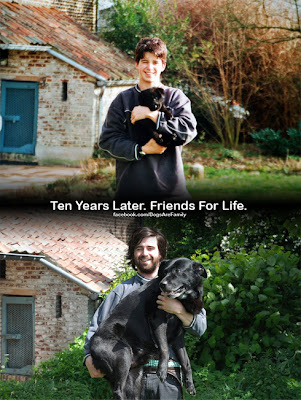
I recently saw this image posted on Facebook and I don’t mind admitting that it tugged at my emotions

Around the same day, I was watching my two year old toddler (an unpublished and independent kawaii survey reports the toddler is somewhat cute) interacting with my dogs (they are cute, no survey required).
(source)

The toddler is currently learning (slowly) that the world is not 100% about the toddler. This involves me frequently coaching the toddler’s interactions with other people and children (“yes it’s very sweet that you love your friend and that you’re giving them a big hug, but now you’ve actually crash-tackled them to the floor and they’re crying, it might be time to give them space”) and more recently in a similar way with the dogs.

These home observations and website images got me thinking about how important my pets, and in particular, my dogs, were to me while growing up. 


(source)
It got me wondering - why do so many of us have enduring psychological attachment to our childhood dogs
And do our childhood experiences stay with us as firmly held attitudes into adulthood? 

I plan to spend my next posts looking at some of the science surrounding children and dogs: the good, the bad and the ugly.


Why are dogs good for children?
The biophilia hypothesis suggests that people are instinctively attracted to animals and nature. It proposes that our relationship with them may contribute on an intimate biological level to our sense of fulfilment and identity. In our current busy lifestyles, often lived in industrialised city environments removed from ‘nature’ in its purest form, dogs and other companion animals offer opportunities for these ‘biophilic’ relationships. 

These nurturing relationships with animals are considered particularly important during early and middle childhood. Some research suggests that humans have a higher degree of attachment to dogs than we do to other companion animals; however, this may be a flaw in the way such studies have assessed attachment.

Dogs may promote respect and compassion for animals and nature by offering a child valuable opportunity to experience and learn about animals and the ‘facts of life’. Dogs can assist children to learn about responsibility. They can encourage trust, self-belief as well as caring attitudes and behaviour. They may promote exercise and healthy development, offer social support and provide companionship, security, comfort. Dogs can be an important source of fun and have demonstrated they can act as an outlet for childhood affection.

(source)
Research has shown that regular contact with two or more dogs in the first year of life is correlated with a reduced incidence of childhood allergies and asthma. The presence of a dog in a learning environment (such as a classroom) has been shown to contribute to children’s motivation and can speed task completion without compromising accuracy. Dogs in this context also aid emotional stability, improve children’s attitudes towards school and aid in the learning of respect, empathy and responsibility.

So it seems like there’s a lot to like about fostering a positive relationship between children and dogs. But what happens to children when such an important relationship ends? And do our childhood experiences stay with us into adulthood? 

Dont worry - I’ll be sure tell you more about that next time!

Mia

p.s. Dont forget to head over to our facebook page to keep track of the childhood dog photo challenge!

Further reading:

Serpell J. (1999). Animals in Childrens Lives, Society & Animals, 7 (2) 87-94. DOI: 10.1163/156853099X00013

OHaire M. (2010). Companion animals and human health: Benefits, challenges, and the road ahead, Journal of Veterinary Behavior: Clinical Applications and Research, 5 (5) 226-234. DOI: 10.1016/j.jveb.2010.02.002

Melson G.F. Child Development and the Human-Companion Animal Bond, American Behavioral Scientist, 47 (1) 31-39. DOI: 10.1177/0002764203255210

Blue G.F. (1986). The Value of Pets in Childrens Lives, Childhood Education, 63 (2) 85-90. DOI: 10.1080/00094056.1986.10521747

Zasloff R.L. (1996). Measuring attachment to companion animals: a dog is not a cat is not a bird, Applied Animal Behaviour Science, 47 (1-2) 43-48. DOI: 10.1016/0168-1591(95)01009-2

Holscher B., Frye C., Wichmann H.E. & Heinrich J. (2002). Exposure to pets and allergies in children, Pediatric Allergy and Immunology, 13 (5) 334-341. DOI: 10.1034/j.1399-3038.2002.02063.x

Anderson K.L. & Olson M.R. (2006). The value of a dog in a classroom of children with severe emotional disorders, Anthrozoos: A Multidisciplinary Journal of The Interactions of People & Animals, 19 (1) 35-49. DOI: 10.2752/089279306785593919

Gee N.R., Harris S.L. & Johnson K.L. (2007). The Role of Therapy Dogs in Speed and Accuracy to Complete Motor Skills Tasks for Preschool Children, Anthrozoos: A Multidisciplinary Journal of The Interactions of People & Animals, 20 (4) 375-386. DOI: 10.2752/089279307X245509

© Mia Cobb 2012
Read More..